
Decision Architecture: Enhancing Transparency in Resource Allocation. Decision architecture refers to the intentional, strategic design of how an organisation allocates its limited resources, such as financial assets, human capital, executive focus, technological capabilities, and time. The primary aim of a robust decision architecture is to ensure resource allocation decisions are visible and based on clear criteria, making them comparable across initiatives. This systematic approach aims to diminish the reliance on hierarchical structures, personal influence, historical budget allocations, or the fate of those who make the most persuasive political arguments.

A well-constructed decision architecture does not eliminate the need for judgment; rather, it brings that judgment to the forefront, ensuring it is transparent, well-reasoned, and subject to scrutiny. This transparency helps stakeholders understand the rationale behind each funding decision and contrasts sharply with scenarios where leaders may struggle to explain why they prioritised one project over another. In such cases, resource allocation can easily fall prey to biases towards “pet projects,” decisions influenced by sunk-cost fallacies, or the voices of those with the loudest advocacy rather than objective evaluation.
In this context, portfolio management emerges as a more sophisticated approach to resource allocation. Rather than treating initiatives as separate, isolated requests, it views them as interconnected investments that collectively contribute to the organisation’s strategic objectives. Portfolio management rigorously evaluates whether the entire suite of initiatives advances the organisation’s overarching strategic priorities and aligns with available capacity and resources. It balances risks across projects and ensures enough flexibility to accommodate emerging opportunities.
By following this disciplined method, organisations can foster a culture of accountability and innovation, as clear criteria and an understanding of impact back every resource allocation decision. This framework ultimately empowers leaders to make informed choices that reflect the organisation’s values and long-term vision.
Publish the Criteria for Resource Allocation
To allocate resources effectively, establish and publish clear criteria that determine whether an initiative merits organisational support. Articulate these criteria in a way that everyone involved can understand—whether they are submitting proposals, sponsoring initiatives, executing them, or affected by the outcomes. Importantly, they should reflect the organisation’s true strategic goals rather than relying on vague notions like “innovation” or “growth,” which offer little guidance in distinguishing between competing proposals.
Recommended Criteria
For most organisations, a concise list of three to five well-defined criteria suffices to guide decision-making. Some commonly adopted criteria include:
Strategic Alignment: This criterion evaluates how directly the initiative supports and advances a specific organisational priority or goal. It encourages individuals to align their proposals with the organisation’s strategic roadmap, ensuring resources are directed toward initiatives that contribute to overarching objectives.
Expected Value: Here, the focus is on the measurable benefits the initiative could deliver. This involves assessing potential customer satisfaction, financial returns, operational efficiencies, social impact, or enhancements to organisational capabilities. Clearly defining expected outcomes lets the organisation weigh potential return on investment against required resources.
Feasibility and Capacity: This criterion examines whether the organisation has the necessary skills, personnel, time, dependencies, and technology to execute the initiative realistically. Consider current resource allocation and organisational readiness to take on new projects without overextending capabilities.
Risk Assessment: Understanding the risks associated with each initiative is key. This includes analysing the likelihood and potential impact of failure across dimensions such as delivery timelines, user adoption, regulatory compliance, reputation damage, and financial sustainability. A comprehensive risk assessment helps you make informed decisions and prepare mitigation strategies.
Urgency or Timing: This criterion assesses whether the initiative is time-sensitive. Factors such as imminent deadlines, market opportunities, compliance requirements, or potential costs from delays can elevate the importance of certain initiatives over others.
By publishing these criteria, organisations can transform an often implicit competition for influence into a transparent discussion about trade-offs. This clarity not only supports fair decisions but also allows teams to refine their proposals before bringing them to a decision-making forum. If a project cannot clearly demonstrate a credible connection to the organisation’s strategic goals, provide meaningful value, and align with available capacity, it should not proceed simply because it has a persuasive or senior sponsor.
Criteria Review and Adaptation
The established criteria do not need to remain static indefinitely. While consistency is crucial for fair decision-making, these criteria should be revisited and reviewed as the organisation’s strategy evolves. For instance, if an organisation faces a significant regulatory deadline, it may be prudent to temporarily prioritise compliance and risk management in the evaluation process. Conversely, if an organisation is focused on expansion, it might place greater weight on initiatives that promise notable customer impact or leverage strategic market opportunities.
In conclusion, a rigorous, transparent framework for assessing initiatives fosters accountability and ensures resources are allocated to endeavours that best support the organisation’s mission and goals.
Using a Scoring Rubric for Proposal Evaluation
A scoring rubric is an essential tool that turns broad evaluation criteria into a systematic, repeatable way to assess proposals. Instead of relying on subjective opinions like “Do we like this project?”, decision-makers utilise a scoring system that measures each proposal against clearly defined standards. A straightforward five-point scale is often effective, as it offers sufficient differentiation while avoiding the misleading notion of mathematical precision often associated with more complicated systems.
For instance, when evaluating the strategic alignment of a project, the scoring scale might look like this:
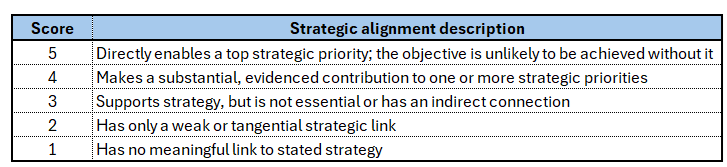
Similarly, you can apply this structured approach to assess other important factors such as value, risk, feasibility, and urgency for each proposal. The critical part of this process is defining what each score represents before evaluating proposals. For example, a score of 4 for expected value should be grounded in agreed-upon criteria, such as projected revenue ranges, potential cost reductions, impacts on customer satisfaction, risk reductions, or capability improvements. This makes the assessment less about individual interpretation and more about collective understanding.
To ensure the evaluation aligns with strategic priorities, you can apply weights to each criterion. This means that various factors can receive different levels of importance based on their relevance to the organisation’s goals. For instance, in some contexts, you might assign higher weights to strategic alignment and potential value than to feasibility.
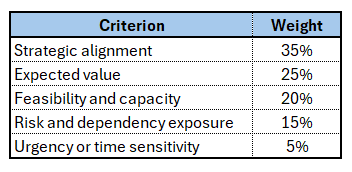
A weighted rubric is not an automated decision-making tool. Instead, it provides a structured starting point that facilitates discussion among decision-makers. This approach allows the group to pinpoint areas of disagreement. For example, a project may show high potential value but raise feasibility concerns, or it might align strongly with strategic goals but carry unacceptable risk. This kind of dialogue is far more productive than a subjective debate about which initiative feels more important.
Furthermore, standardised scoring significantly enhances the ability to compare proposals objectively. It also helps to level the playing field by mitigating the advantage typically held by powerful or vocal sponsors who might otherwise sway opinions based purely on influence rather than merit. By implementing a scoring rubric, organisations can aim for a more equitable and transparent evaluation process that ultimately leads to better decision-making.
Comprehensive Portfolio Overview
To manage investments effectively, it’s crucial to understand the entire project portfolio, not just individual projects in isolation. A robust portfolio view gives leaders a unified snapshot of all initiatives—active, proposed, paused, or completed—enabling more informed decisions.
Essential Components of the Portfolio View
A well-structured portfolio view should encompass the following key elements:
Initiative Name and Purpose: Clearly state the name of each initiative along with a concise, one-sentence description that outlines its primary objective.
Accountable Owner: Identify a designated individual responsible for each initiative. This person is accountable for the project’s progress, decisions, and outcomes.
Strategic Objective or Funding Theme: Indicate how the initiative aligns with broader organisational goals or funding themes. This helps to prioritise initiatives based on strategic relevance.
Current Funding and Required Capacity: Provide details on the financial resources currently allocated to the initiative, as well as the capacity required to execute it effectively. Include insights into workforce availability.
Weighted Score and Key Assumptions: Assign a weighted score that reflects the initiative’s value or potential return on investment. Also document the key assumptions underpinning the scoring process, such as market conditions or technological feasibility.
Status Classification: Clearly categorise the project’s status into one of six classifications: proposed, funded, active, paused, pivoting, or closed. This helps in assessing the overall health of the portfolio.
Major Milestones, Dependencies, Risks, and Outcome Measures: Highlight critical milestones that signify progress, along with any dependencies that may affect project timelines. Identify potential risks to the initiative and establish outcome measures to gauge success.
Decision Rationale: Summarise the decisions made regarding the initiative and the rationale behind them. This should include insights into why an initiative is proceeding, changing direction, or being discontinued.
Insights from Portfolio Analysis
A comprehensive portfolio view reveals strategic patterns that may be obscured when evaluating projects in isolation. For example, it might uncover that a significant proportion—such as 70%—of specialised capacity is allocated to low-return maintenance tasks. This insight might highlight the need to reallocate resources to an underfunded strategic growth initiative.
Moreover, analysing the portfolio can surface duplicative efforts, conflicting initiatives, critical dependencies that could make project timelines unrealistic, and a concerning over-concentration of funding in specific business areas, undermining diversification and risk management.
Emphasising Capacity alongside Budget
Capacity is as important as budget in a portfolio view. Financial resources may be secured, but without the requisite skilled personnel—such as engineers, analysts, operational leaders, writers, subject-matter experts, or change specialists—progress can stall. Therefore, portfolio analysis must include visibility into resource requirements and the availability of shared specialist capacity, highlighting potential constraints on project execution.
Importance of Clear Ownership
Each funded initiative must have a designated owner who is explicitly responsible for the initiative’s performance. Ownership entails more than simply overseeing project tasks; it involves maintaining a clear case for investment, providing honest progress reports, escalating significant risks, and making informed recommendations regarding whether the initiative should continue, pivot, pause, or be terminated. When ownership is not clearly defined, accountability is diluted, allowing weak projects to survive due to a lack of oversight and confrontation with unfavourable evidence.
By incorporating these components into the portfolio view, organisations can improve decision-making, optimise resource allocation, and ultimately achieve better outcomes across initiatives.
Establishing a Decision Cadence for Effective Portfolio Management
Creating a reliable decision cadence is crucial to ensure visibility translates into meaningful action across any project portfolio. A well-structured cadence consists of two distinct levels, each serving a specific purpose in the decision-making process.
Monthly Portfolio Review: A Tactical Approach
The monthly portfolio review is a short, operationally focused forum for timely assessment of changes since the previous meeting. This review facilitates a systematic examination of critical operational metrics such as any variances in spending or project capacity, missed milestones, emerging risks, delivery blockers, altered assumptions, and decisions requiring urgent attention. The emphasis here is on action and accountability rather than on formal presentations.
During these meetings, it is vital to produce clear, actionable outcomes. For instance, if the team identifies a delivery blocker, it should develop steps to remove it promptly. If any assumptions prove inaccurate, the review should lead to validating or adjusting them. The team may also discuss reallocating specialised resources or escalating particular decisions that could significantly impact project performance. The ultimate goal of these operational reviews is to create a responsive environment that fosters quick adjustments based on the latest data and feedback.
Quarterly Reallocation Review: A Strategic Perspective
In contrast, the quarterly reallocation review adopts a more strategic lens, serving as a comprehensive evaluation point for leaders to compare the entire project portfolio against current organisational priorities. This meeting involves tough choices about resource allocation, including decisions to increase funding, continue current plans, narrow the scope of certain projects, pivot to new focuses, pause ongoing efforts, or even terminate projects that no longer align with strategic goals.
Crucially, the quarterly review must go beyond merely assessing the performance of existing projects with the question, “How are current projects performing?” It should challenge leaders to consider, “If we were making these resource allocation decisions today, would we choose the same projects?” This reflective questioning matters because resources often remain tied to prior decisions even when the strategic context shifts.
A quarterly reset not only lets leaders redirect funding and capacity toward higher-value initiatives but also reduces the inclination to treat prior funding allocations as irrevocable commitments. Establishing defined review thresholds—such as two consecutive missed milestones, the disproval of a critical assumption, or a performance score falling below a pre-agreed level—enhances the credibility of the reallocation process and depersonalises the discussions. This approach fosters a culture of agility and responsiveness, ensuring that the portfolio consistently reflects the organisation’s evolving strategic priorities.
By implementing this structured decision cadence, organisations can navigate change effectively, optimise resource utilisation, and improve overall project success.
Show the Rationale for Decision-Making
Transparency in decision-making is vital for organisational trust and effectiveness, but it doesn’t mean disclosing every confidential detail. Instead, it means making the reasoning behind significant decisions visible to those who need to understand and act on them. This approach fosters accountability and encourages future participation in the decision-making process.
For each initiative, communicate a concise decision record that outlines the rationale behind the outcome. Here’s how this can be structured:
Funded Initiatives
- Explanation of Ranking: Explain why the initiative received a high ranking in the funding process. Detail the specific criteria it met and how it aligns strategically with the organisation’s goals.
- Expected Outcomes: Describe the anticipated results and impacts of the funding, including potential benefits and measures of success.
- Funding Conditions: Specify any conditions required for continued support, such as performance metrics or milestones.
Paused Initiatives
- Identify Key Factors: Discuss the evidence, constraints, dependencies, or timing issues that led to the decision to pause the initiative. This could include resource limitations, shifts in market conditions, or new organisational priorities.
- Criteria for Reconsideration: Outline what changes would be necessary for the initiative to be revisited in the future. This may involve changes in the external environment, adjustments to the project scope, or improved resource availability.
Killed or Closed Initiatives
- Reason for Withdrawal: Provide a detailed explanation as to why the organisation is withdrawing support from the initiative. Focus on objective assessments related to feasibility, alignment with strategic goals, or resource allocation.
- Learning Retained: Highlight the lessons retained from the initiative, including insights gained and how they can inform future projects or strategies.
- Resource Redeployment: Discuss how individuals and resources will be redirected to other priorities or initiatives, ensuring that valuable assets are utilised
4. Not Funded Initiatives
- Criteria Shortcomings: Clearly articulate which specific criteria the initiative did not meet sufficiently to secure funding. This may include aspects like innovation, feasibility, alignment with strategic objectives, or potential return on investment.
- Recommendations for Future Proposals: Provide constructive feedback on how future proposals could be strengthened, helping teams improve their submissions and better align with organisational priorities.
Implementing this structured approach builds trust within the organisation. Even if teams are unhappy with a decision, they’re more likely to accept it when they can see the criteria, evidence, and trade-offs that informed it. This transparency also encourages stronger future proposals, as team members gain a clearer understanding of the decision-making framework.
Choose language in these communications thoughtfully. Terms like “killed” can carry negative connotations and may imply failure on the part of the team members involved. Instead, focus on the rationale for reallocating or discontinuing investments that no longer justify committing limited resources. By adopting this perspective, organisations can foster a culture that views ceasing work as a logical, evidence-based decision. This encourages retaining useful lessons, valuable assets, and important relationships that can propel the organisation forward in future endeavours.
Build Anti-Bias Checks
Even the most thoughtfully crafted rubrics can fall prey to common cognitive biases such as excessive optimism, groupthink, undue executive influence, attachment to previous investments, and selective use of evidence. Implementing anti-bias practices adds a critical layer of robustness to the decision-making process. These practices help ensure that judgments are based on a comprehensive assessment rather than on skewed perceptions.
A particularly effective method for identifying potential pitfalls is the pre-mortem analysis. In this exercise, team members envision a scenario in which the initiative has failed six months to a year after launch. Participants then brainstorm the most plausible reasons for failure, which might include weak customer demand, unclear ownership of responsibilities, underestimating delivery complexity, stakeholder resistance, unrealistic expectations of benefits, lack of necessary skills, or unmanageable dependencies. By engaging in this forward-thinking discussion, teams can pinpoint risks and concerns that individuals might otherwise avoid during more optimistic planning phases.
Another valuable technique is the red-team review, where individuals not involved in developing the proposal critically evaluate it. Their purpose is not to generate negativity for its own sake, but to challenge underlying assumptions, explore overlooked alternatives, question the validity and reliability of the evidence presented, and identify the conditions under which the initial case for investment could be deemed false. This approach is particularly advantageous for initiatives that are large in scope, involve irreversible commitments, carry political sensitivities, or hold strategic importance for the organisation.
In addition, a diverse review panel helps mitigate the risk of one discipline, department, or leadership group exerting disproportionate influence over the decision-making process. A cross-functional panel should ideally include representatives from strategy, finance, project delivery, operations, customer experience, technology, and subject-matter expertise, as well as individuals responsible for overseeing organisational change. This cross-pollination of perspectives can significantly reduce individual biases, enhance the credibility of evaluations, and lead to more realistic feasibility assessments.
Finally, decision-makers must clearly distinguish between facts and assumptions. A well-structured business case should clearly state what is known, what is estimated, what is validated through evidence, and what conditions must be met for the initiative to succeed. This clarity helps to prevent the pitfalls of persuasive storytelling from being conflated with solid evidence. It ensures all stakeholders share a common understanding of the proposal’s merits and challenges.
A Practical Starting Point for Effective Portfolio Management
You don’t need a complex portfolio-management system to make meaningful strides in resource allocation. Instead, consider utilising accessible tools like a shared document, spreadsheet, dashboard, or a simple internal webpage. The key is to keep the information you gather visible to relevant stakeholders and updated regularly, fostering transparency and informed decision-making.
To get started, publish your top three funding criteria clearly and concisely. Define what constitutes a high, medium, and low score for each criterion. This framework will help you evaluate proposals and initiatives objectively. As part of this exercise, select one live decision this week to apply your funding criteria.
For instance, when reviewing a funding request, you should include several critical elements:
Decision: Clearly outline the action being proposed. For example: “Fund a 90-day pilot project for a new author-resource hub.”
Criteria Results: Present a detailed analysis of how the project aligns with your organisational goals. In this case, you might note: “The project demonstrates a strong strategic alignment with our objectives for audience growth and long-term content value. It has moderate expected value based on pending audience testing and is feasible given our current writing and web development capacities.”
Conditions for Success: Establish clear conditions the project must meet to continue after the pilot phase. You might state: “The initiative will proceed only if it achieves agreed-upon metrics such as readership numbers, email sign-up rates, or engagement levels by the quarterly review.”
Project Owner: Designate a specific individual accountable for the initiative, such as “Named content lead,” who will oversee the execution and ensure the project meets its outlined goals.
By implementing this small but impactful act, you instil a cultural shift in how resources are allocated within your organisation. It sends a strong signal that decisions about resource distribution are driven by strategic alignment, evidence-based evaluation, and accountable leadership, rather than by politics, entrenched habits, or the volume of individual advocacy. This approach not only promotes responsibility but also builds a more objective, results-oriented organisational culture.
This Post is 13/20. Tomorrow’s post will be: Data-Driven Management Without Dashboard Fatigue
