
Beyond Your Walls: How Open Innovation Accelerates Business Growth. Effective innovation management goes beyond merely depending on internal research, product development teams, or established suppliers. It intentionally seeks opportunities beyond the organisation to discover valuable ideas, innovative technologies, unique capabilities, and lucrative commercial prospects. This proactive approach embodies open innovation, which merges internal expertise with external knowledge and solutions from a diverse array of partners. These include startups that bring fresh perspectives and agility, universities that contribute cutting-edge research and academic insights, suppliers that offer specialised technologies and materials, customers that provide real-world feedback and needs, research organisations that generate pioneering studies, and industry networks that facilitate collaboration and information sharing.

Inbound open innovation, in particular, focuses on acquiring external knowledge and technologies that can strengthen the organisation’s own innovation efforts. This process may involve scouting for promising technological advancements, collaborating with academic institutions on research projects, or forming strategic alliances with startups that have innovative products or services. By leveraging the rich pool of resources and insights outside the organisation, companies can significantly accelerate innovation cycles, reduce time-to-market for new offerings, and ultimately create solutions better aligned with market needs and customer expectations. Embracing this approach not only broadens creativity and problem-solving but also encourages a culture of collaboration and openness, which are vital in today’s fast-paced, ever-evolving business landscape.
The Importance of External Scouting in Innovation
In today’s rapidly evolving business landscape, internal teams play a critical role: they understand the organisation’s strategic vision, customer needs, existing systems, and operational constraints. However, it is unrealistic to expect these teams to know every emerging capability or be aware of every alternative solution in the marketplace. This is where external scouting becomes essential for innovation leaders. By engaging in external scouting, organisations can identify and leverage relevant technological advancements and trends much earlier in their development. This may include discovering a startup that has developed cutting-edge technology, collaborating with a university research team that specialises in a particular field, engaging with suppliers who have introduced significant process improvements, or connecting with customer groups with unmet needs that can be transformed into innovative products or services.
It’s crucial to clarify that open innovation should not be mistaken for simply outsourcing innovation efforts. While external collaborations play a pivotal role, organisations must still establish clear strategic priorities. They need to ensure informed decision-making processes are in place, leverage technical expertise, and have accountable leadership guiding these initiatives. Open innovation lies in an organisation’s willingness to explore and implement ideas from outside its traditional boundaries through discovery, testing, adaptation, licensing, co-development, or integration.
This innovative approach becomes particularly advantageous under several circumstances:
Rapid Technological Advancements: When technology evolves faster than the organisation’s internal development cycles, external scouting can provide quicker access to the latest innovations.
Specialised Knowledge Gaps: Organisations often need specialised knowledge or skills that are not available in-house. External partnerships can bridge these gaps effectively.
Multidisciplinary Challenges: Complex problems that span multiple disciplines, functions, or industry sectors benefit from external partners who bring diverse perspectives and expertise.
Time and Cost Constraints: When internal development processes are sluggish, costly, or uncertain, external scouting can offer more agile solutions.
Direct Customer Involvement: Engaging customers and frontline users directly in solution design and development can lead to more effective, user-centred innovations.
Exploring Opportunities with Minimal Risk: Organisations looking to pursue new opportunities without substantial upfront investment can greatly benefit from external scouting. It allows for exploratory ventures without the immediate pressure of large-scale commitments.
Research on innovation ecosystems consistently highlights the significance of various external collaborators, including suppliers, customers, universities, research organisations, and other businesses, as vital channels for acquiring external knowledge and fostering collaboration. Suppliers and customers are often sought as innovation partners because they offer firsthand insights into product performance and market needs. Meanwhile, academic institutions can contribute a wealth of scientific knowledge and interdisciplinary research capabilities that can further strengthen an organisation’s innovation efforts.
In conclusion, external scouting is a strategic necessity in the modern innovation landscape. It empowers organisations to harness external insights and capabilities, leading to more effective, timely, and relevant solutions that drive growth and competitiveness in an increasingly complex environment.
The Open-Innovation Pipeline: A Comprehensive Approach
To harness open innovation effectively, establish a disciplined pipeline that turns ideas and discussions into actionable strategies. Without this structure, open innovation can devolve into unproductive dialogues, one-off presentations, or disjointed spectacles known as “innovation theatre.” A robust process will guide teams from identifying a specific business need to making informed decisions about whether to scale, modify, pause, or terminate an initiative.
1. Formulate Clear Challenge Statements
The foundation of the open-innovation pipeline is creating clear challenge statements. These statements are concise, outcome-driven descriptions of significant problems or opportunities facing the organisation. Crucially, they articulate the need without suggesting a predetermined solution.
- Example of a Weak Challenge Statement: “We need an AI platform.”
- Example of a Strong Challenge Statement: “How might we reduce the time frontline staff spend preparing compliance reports by 50% while simultaneously enhancing accuracy and auditability within 12 months?”
The stronger challenge statement highlights essential elements, including the target user group, specific problem, desired outcomes, and success metrics. It opens the door to a wide array of potential solutions, such as automation tools, workflow redesign, data integration strategies, training programs, external software partnerships, or a mixture of these options.
A well-crafted challenge statement typically encompasses the following components:
Business Problem or Opportunity: This section should provide a comprehensive overview of the specific issue or potential opportunity that needs to be addressed. It should describe the problem, including its origins, current implications, and alignment with broader market trends or organisational changes.
Stakeholders Affected: Clearly identify all parties the issue will impact. This includes not only employees at various levels within the organisation but also customers, suppliers, shareholders, and potentially external stakeholders such as regulatory bodies or community members. Describing how each group is affected can clarify the problem’s urgency and scale.
Strategic Importance: Explain why resolving the identified challenge is vital to the organisation’s mission and long-term goals. Explain how addressing this issue supports key objectives such as improving operational efficiency, enhancing customer satisfaction, driving revenue growth, or strengthening competitive advantage.
Constraints: Here, outline any limitations that may hinder the progress of the initiative. This could encompass financial budgets, relevant regulations and compliance issues, security concerns, timing constraints due to market cycles or operational availability, and any internal processes that must be considered.
Measurable Desired Outcomes: Specify clear, quantifiable goals that indicate success once the initiative is implemented. This may include metrics such as a percentage increase in revenue, a reduction in operational costs, improved customer satisfaction scores, or specific timelines for project completion.
Out of Scope Considerations: This section will define what aspects or elements are explicitly excluded from this initiative. This clarity helps prevent scope creep and ensures all stakeholders understand the project boundaries.
Executive Responsibility: Clearly articulate who within the organisation is responsible for overseeing this challenge. Naming the specific business leader or executive, along with their role and authority, helps establish accountability and provides a clear point of contact for stakeholders involved in the initiative.
This approach encourages valuable external input while safeguarding the organisation from vague, costly, or misaligned experimentation.
2. Conduct External Scouting
Once the team has clearly defined the challenge, it shifts its focus outward to identify potential partners and solutions that can address the stated need. External scouting can draw on many resources, including startup databases, accelerator programs, university research institutions, industry associations, supplier networks, conferences, customer communities, open calls for solutions, expert networks, and targeted market research.
The scouting process should be systematic rather than based on existing networks or relying on senior leadership’s connections. An effective and repeatable scouting approach might include the following steps:
Translating Business Challenges into Search Criteria: Begin by thoroughly analysing each business challenge to establish a comprehensive and well-defined set of criteria that accurately reflects the specific requirements. This process involves identifying the core issues, articulating the desired outcomes, and prioritising criteria based on urgency and relevance to achieve effective solutions.
Mapping Technologies and Markets: Conduct an in-depth exploration of relevant technologies and market dynamics pertinent to the identified challenges. This includes examining current market trends, innovative research fields, and emerging technologies that could address the challenges. Also identify potential partners—such as startups, academic institutions, and industry leaders—engaged in these technologies to foster collaboration and drive innovation.
Screening Candidates: Implement a rigorous assessment process to evaluate potential partners against strategic criteria. This evaluation should consider strategic alignment with your organisation’s goals, specific capabilities and expertise, industry maturity, marketplace reputation and credibility, and cultural compatibility to ensure a harmonious partnership.
Initial Discovery Discussions: Once you screen candidates, start exploratory conversations with selected potential partners. Conduct these discussions under appropriate confidentiality agreements to safeguard sensitive information. Share enough context and background information to support productive dialogue and a shared understanding of goals and expectations.
Comparative Analysis: Approach the selection process with a mindset of thorough evaluation by comparing multiple potential solutions. Rather than settling on the first candidate that meets the criteria, systematically review options, weigh their strengths and weaknesses, and identify the most suitable partner to address the business challenges.
Documenting Insights: As you navigate through the search and evaluation process, maintain meticulous records of all findings, insights, connections made, and evaluations conducted. This documentation should serve as a valuable resource for future innovation teams, helping to avoid redundancy and facilitating informed decision-making down the line.
Digital platforms, expert networks, open calls for proposers, and challenge-based programs can significantly streamline connections between organisations and accessible problem solvers, especially when matching a distinct demand with external technical or scientific expertise is vital.
3. Implement Structured Pilots
The next step is to run structured pilots—carefully designed experiments that reduce uncertainty about potential solutions. Unlike vague trials, free demonstrations, or open-ended projects without defined checkpoints, a well-constructed pilot serves a clear purpose: to verify whether a proposed solution can deliver adequate value in a live operational context safely and practically.
Key elements that should be included in a well-structured pilot are:
Hypothesis to be Tested: Articulate a clear and specific hypothesis that the pilot project aims to validate or assess. This should detail the assumptions about potential outcomes and the expected impact on the identified issue or opportunity.
Use Case and Context: Provide an in-depth explanation of the particular business unit and user group that will engage with the pilot initiative. Describe the operational environment where the pilot will take place, including any relevant processes, technologies, or workflows that will be involved, ensuring an understanding of how this context influences the pilot’s success.
Pilot Duration and Budget Limits: Outline a comprehensive pilot timeline, specifying key milestones and deliverables. Additionally, establish a clear budget that highlights financial constraints, including allocations for personnel, technology, training, and other necessary expenses. Detail how you will monitor funds throughout the pilot.
Partner and Responsibilities: Define the specific roles and responsibilities of any external partners involved in the pilot, such as vendors or consultants, as well as internal team members. Clarify how these responsibilities will be communicated and coordinated to ensure smooth collaboration and accountability throughout the pilot’s lifecycle.
Required Resources: List all essential resources required for the successful execution of the pilot. This includes access to relevant data sets, necessary technology systems, physical facilities, and any customer segments that need to be engaged during the pilot. Indicate how these resources will be obtained and managed.
Success Criteria: Establish clear, measurable benchmarks to indicate the pilot’s effectiveness. These criteria should align with the initial hypothesis and include quantitative metrics (such as performance numbers) and qualitative measures (such as user feedback). Also establish a baseline for comparison to evaluate the pilot’s performance over time.
Risk Assessment: Conduct a thorough evaluation of potential risks associated with the pilot. This should encompass technical risks (e.g., technology failures), commercial risks (e.g., market acceptance), operational risks (e.g., process inefficiencies), security risks (e.g., data breaches), regulatory risks (e.g., compliance issues), and reputational risks (e.g., public perception). Provide mitigation strategies for each identified risk.
Evidence for Decision-Making: Detail the specific evidence and data needed to inform the decision on whether to expand or scale the initiative. This should encompass both qualitative feedback and quantitative performance data gathered throughout the pilot.
Final Decision Timeline: Establish a clear timeframe for when the team will make a final decision on the pilot’s future. Outline key decision points throughout the pilot and define the potential outcomes, which may include scaling up the initiative, pivoting the approach based on learnings, maintaining the pilot for further assessment, or discontinuing the project altogether. Provide a rationale for each possible outcome.
For instance, a logistics company might run a 12-week pilot with a route-optimisation startup to reduce failed deliveries and minimise fuel consumption in a metropolitan area. Success criteria may include achieving at least a 10% reduction in delivery exceptions, maintaining customer satisfaction levels, integrating with current dispatch data, and ensuring cost-effectiveness for broader deployment. If these thresholds aren’t met, the organisation must either adjust the initiative or discontinue it rather than allowing an indefinite, inconclusive pilot to persist.
Pilot governance should include agreed-upon milestones, baseline performance data, target measures, identified risks, decision-makers, and clear possible outcomes—whether that be scaling the initiative, extending it, redirecting resources, delaying for future consideration, or stopping altogether.
4. Scaling Decision: To Scale or Not to Scale
The final step is not simply assessing whether the pilot received positive feedback. Instead, the organisation must thoroughly evaluate the evidence against predefined thresholds to make a definitive decision.
A scaling decision may be warranted when the pilot has clearly shown:
Significant Benefits: Clear and measurable advantages that can be observed across various dimensions, including customer satisfaction, operational efficiency, financial returns, or strategic positioning in the market. These benefits should be backed by data or case studies demonstrating how the effort has positively impacted stakeholders and contributed to overall organisational goals.
Realistic Technical Performance: Comprehensive evidence indicating that the proposed solution is capable of delivering consistent performance under conditions that mimic actual operational scenarios. This should include performance metrics, stress-testing results, and real-world application examples that illustrate the solution’s reliability and efficiency in typical usage environments.
Viable Implementation Plan: A detailed and actionable plan outlining the steps necessary for deploying the solution effectively. This plan should encompass timelines, resource allocation, training requirements, and ongoing support mechanisms to ensure a smooth transition and sustained operation post-implementation.
Acceptable Risk Levels: A thorough assessment ensuring that all potential risks—be they security breaches, legal liabilities, regulatory compliance issues, or threats to the organisation’s reputation—are identified and managed within acceptable limits. This includes risk mitigation strategies and contingency plans to address any unforeseen challenges that may arise during or after implementation.
This comprehensive approach ensures innovations align with organisational goals and are ready for practical application, maximising the potential for success within a well-structured open-innovation pipeline.
Partner Types in Innovation
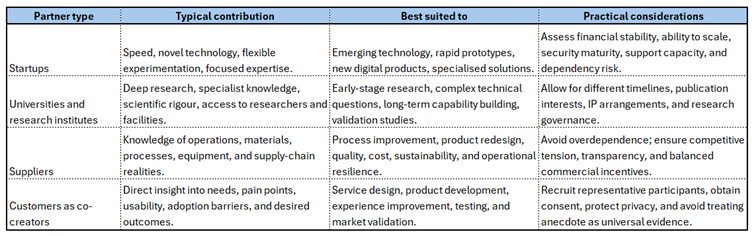
Different external partners offer various forms of value that can significantly impact the success of innovation efforts. Selecting the most suitable partner type involves considering the specific challenge, the stage of innovation, and the organisation’s intended outcomes. Each partner type brings unique strengths that can enhance the innovation process.
Customers as Co-creators
Involving customers as co-creators is particularly beneficial, as it provides direct insights into their needs, pain points, usability challenges, adoption barriers, and desired outcomes. By engaging customers throughout service design, product development, and experience enhancement, companies can gather invaluable feedback that shapes outcomes. This collaborative approach supports thorough testing and market validation while ensuring the solutions developed closely align with user expectations.
To implement effective customer co-creation, it’s essential to recruit representative participants who reflect the target user base, obtain informed consent, protect participant privacy, and avoid mistaking individual anecdotes for universal trends.
Beyond customer engagement, partnering with universities and public research institutions can offer specialised expertise and access to advanced research capabilities that may be difficult or time-consuming to develop internally. Such collaborations are particularly advantageous for upstream research and tackling interdisciplinary challenges, as they let companies leverage academic insights and technological advances.
A mature innovation portfolio often involves collaboration with multiple types of partners simultaneously. For example, in the case of a manufacturer focusing on developing a low-waste packaging solution, the organisation might collaborate with a university to explore material science advancements, partner with a startup to integrate cutting-edge tracking technology, work with existing suppliers to assess manufacturability, and involve customers to ensure usability and acceptance in the market.
Governance that Facilitates Action
The success of open innovation initiatives often depends on establishing strong governance frameworks before exchanging sensitive information or starting pilot projects. Effective governance should not be seen as bureaucratic red tape; rather, it fosters trust and clarity among all parties involved. With a clear governance structure, both organisations can ensure they understand the rules of engagement, can make timely decisions, and have a fair exit strategy if the collaborative efforts do not yield the expected value. This proactive approach to governance is essential to mitigate risks and improve the overall efficiency of the innovation process.
Intellectual Property Agreements in Collaborative Projects
When entering into collaborative partnerships, it is crucial to establish comprehensive intellectual property (IP) agreements that clearly distinguish between the different types of IP generated and used during the collaboration. Here’s a breakdown of the key categories and considerations:
Background Intellectual Property (Background IP): This refers to the knowledge, software, patents, methods, datasets, and other assets each party owned before the collaborative project began. Identifying and documenting this Background IP is vital to ensure parties retain their pre-existing rights and to avoid confusion about ownership.
Foreground Intellectual Property (Foreground IP): This includes new intellectual property created as a direct result of the collaboration. Foreground IP may include inventions, processes, designs, and other innovations that arise during the project. Establishing ownership and rights to Foreground IP is essential to define which party holds the rights to these new developments.
Improvement Intellectual Property (Improvement IP): This category includes any enhancements or modifications made to existing products, methods, platforms, or processes that were part of the collaboration. Outline clear guidelines on how Improvement IP is owned and used, as this can significantly affect future commercialisation and development efforts.
Use Rights: Define each party’s rights to use the results generated from the collaboration. This includes rights to modify, commercialise, sublicense, or license the outputs, and should specify the markets or territories where these rights apply. Negotiate these terms carefully to balance the interests of all parties involved.
Ownership Structures: No single “best” model exists for intellectual property ownership; each collaborative arrangement may require a tailored approach. For instance, a startup may need to retain ownership of its core platform to ensure financial sustainability and continued innovation. On the other hand, a corporate partner may require specific licenses, exclusivity in designated markets, rights to adapt the solution to meet its unique needs, or ownership of any developments it financially supports.
Academic Considerations: Universities and academic institutions frequently seek to preserve their rights to publish research findings while allowing industry partners a review period. This review period can be crucial for protecting confidential information and for seeking patent protection before public disclosure.
The overarching principle in establishing these agreements is to achieve clarity before work begins. Research on co-creation highlights the importance of setting clear rules and expectations regarding the ownership and use of any data generated throughout the collaboration. Ensuring all parties understand their rights and obligations fosters a cooperative and productive working environment.
Data-sharing Rules
Data is often one of the most valuable yet potentially hazardous components of an external pilot project. To ensure clarity and security, any agreement regarding data sharing must comprehensively outline several key aspects:
Specification of Shared Data: Clearly identify the specific types of data the parties will exchange. This includes defining the format, volume, and any relevant characteristics of the data types involved.
Usage Purpose: Articulate the exact reasons for which the data will be utilised. This could range from operational purposes, product development, and performance analysis to compliance and reporting needs.
Data Classification: Identify and categorise the data being shared. Specify whether the data contains personal information, confidential business information, commercially sensitive data, or information subject to regulatory controls.
Data Management Protocols: Establish guidelines regarding data minimisation to ensure that only the most necessary data is shared. Also outline anonymisation methods, retention periods, deletion processes, and requirements for returning data once the partnership concludes or the purpose is fulfilled.
Security Measures: Define the security controls required to safeguard the data. This should include access permissions, approved storage locations, data-transfer protocols, and obligations to report any data breaches or security incidents.
Usage for Development: Clarify whether the partner may use the shared data for purposes such as training machine learning models, enhancing existing products, or serving additional clients outside the original agreement.
Audit Rights and Compliance: Ensure the agreement includes audit rights that enable parties to verify compliance with the data-sharing terms. Outline obligations to comply with relevant regulations and standards, ensuring both parties adhere to ethical and legal standards.
Progressive Data Access: Facilitate a phased approach to data sharing where, at the outset, only the minimum necessary data is exchanged. As trust develops, evidence of effective data governance matures, and appropriate justifications are provided, access to additional data can be granted under well-defined conditions.
Data sharing is often pivotal in fostering innovation through partnerships. However, organisations must protect information that could provide a competitive edge or put customers and stakeholders at unnecessary risk. Robust data-sharing practices are essential to navigate this balance effectively.
Success Thresholds for Pilot Launch
Before initiating a pilot program, establish clear, specific success thresholds to guide decisions about scaling the project. These thresholds should cover a broad range of metrics beyond technical functionality. Here are the typical categories to consider when defining these thresholds:
1. Customer Outcomes
- Satisfaction: Measure customer satisfaction with the pilot solution through surveys and feedback mechanisms.
- Retention: Monitor the percentage of customers who continue to engage with the product or service post-pilot.
- Conversion Rates: Evaluate the pilot’s effectiveness in converting prospects into actual users or customers.
- Complaint Reduction: Track customer complaints before and after the pilot to assess improvements.
- Usability: Assess ease of use and user experience through metrics such as task completion time and user error rates.
2. Operational Outcomes
- Cycle Time: Calculate the average time taken to complete processes before and after implementation.
- Error Rate: Monitor the frequency of errors occurring in operations linked to the pilot.
- Productivity: Measure changes in output levels and efficiency as a direct result of the pilot.
- Quality: Evaluate the quality of the product or service delivered, using metrics such as defect rates.
- Reliability and Safety: Assess system uptime and safety-related incidents before and after the pilot.
3. Financial Outcomes
- Revenue Generation: Analyse any revenue increase directly attributable to the pilot.
- Margin Improvement: Assess changes in profit margins due to efficiency or cost-saving measures implemented in the pilot.
- Cost Reduction: Track reductions in operational costs resulting from the pilot implementation.
- Payback Period: Determine the time required to recoup the pilot investment.
- Implementation Costs: Review the costs of rolling out the pilot and compare them with expectations.
4. Strategic Outcomes
- Market Entry: Evaluate the pilot’s effectiveness in entering new markets.
- Capability Development: Assess whether the pilot has helped develop new capabilities within the organisation.
- Differentiated Offering: Analyse how the pilot has enhanced the uniqueness of your offerings compared to competitors.
5. Technology Outcomes
- Accuracy: Measure improvements in data accuracy or other relevant technological metrics as a result of the pilot.
- Uptime: Track the system’s operational availability during the pilot phase.
- Interoperability: Evaluate how well the pilot integrates with existing systems and technologies.
- Cybersecurity: Assess the strength and effectiveness of security measures implemented during the pilot.
- Scalability: Review the system’s capacity to handle increased loads without compromising performance.
6. Risk Outcomes
- Regulatory Compliance: Ensure the pilot outcomes meet all necessary legal and regulatory requirements.
- Privacy Protection: Evaluate the measures taken to protect customer data and maintain privacy standards.
- Safety: Monitor for any potential safety risks that may arise during the pilot.
- Vendor Resilience: Assess the reliability and stability of vendors involved in the pilot initiative.
It is essential to avoid setting thresholds that are either overly ambitious—making them practically unattainable—or so vague that they permit any result to be categorised as a success. Each pilot should be methodically designed to address a specific, decision-relevant question and provide clear insights to inform whether and how to scale the initiative.
Exit Clauses in Pilot Projects
Every pilot project should include a well-defined, respectful exit route to ensure a smooth conclusion if necessary. Exit clauses are crucial for managing circumstances where the pilot may not proceed as planned. These clauses must clearly outline the procedures and implications if the pilot encounters any of the following issues: failure to meet specified milestones, significant material security or compliance issues, inability to secure necessary internal approvals, exceeding budgetary constraints, or misalignment with the organisation’s overarching strategic goals.
A comprehensive exit clause should encompass the following key elements:
Termination Rights and Notice Periods: Clearly specify the rights of both parties to terminate the pilot project and outline the required notice period before such termination can take effect. This ensures both sides are adequately prepared for the pilot’s cessation.
Payment Obligations for Work Completed: Detail the payment terms for any work completed up to the point of termination. This includes stipulating whether payment is due immediately or based on a specific schedule, along with any conditions that may affect these payments.
Data Management: Define responsibilities for returning, deleting, or securely retaining any data generated during the pilot. This should include procedures for handling sensitive information to ensure compliance with data protection regulations.
Treatment of Pilot Assets: Clarify the status of pilot-related equipment, prototypes, and access credentials upon termination. This should outline whether these assets are returned, destroyed, or otherwise disposed of.
Ownership or Licensing of Work: Clarify ownership or licensing of any work or results produced during the pilot. This includes intellectual property rights and each party’s ability to leverage the pilot’s outcomes after it concludes.
Confidentiality Obligations: Establish the ongoing confidentiality obligations both parties must adhere to after the pilot terminates. This is vital for protecting proprietary information shared during the project.
Transition Assistance: Outline any transition assistance required if the pilot evolves into a larger-scale project or if service providers change. This might include provisions for knowledge transfer or support in ensuring continuity of service.
Communication Protocols: Set out the communication protocols for informing customers, employees, or other stakeholders impacted by the closure of the pilot. This ensures that all relevant parties are kept in the loop and minimises potential disruption or confusion.
By establishing clear exit conditions, both parties can engage in pilot projects with confidence, knowing that if the experiment does not yield the desired outcomes, it can be concluded cleanly and professionally. This understanding fosters an environment conducive to innovation and helps mitigate risks associated with unsuccessful pilots.
Evaluating the Value of Open Innovation
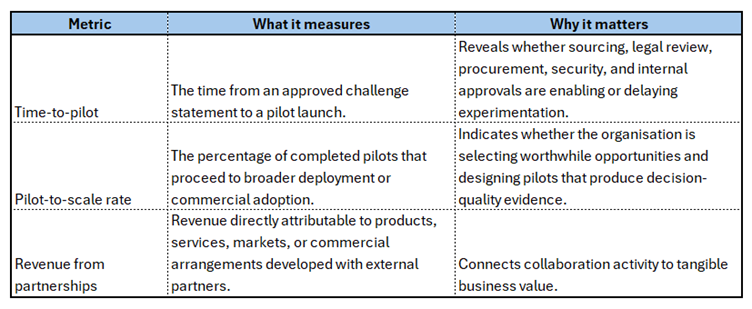
To gauge the success of open innovation initiatives, focus on measurable outcomes and the learning that emerges from these efforts, rather than simply tallying activities. Tracking the number of meetings held, pitches made by startups, workshops conducted, or memoranda of understanding signed may show the level of effort an organisation expends; however, these figures do not show whether it is addressing significant challenges or generating real commercial value.
Here are three fundamental metrics that can serve as a foundation for assessing open innovation initiatives:
In addition to these core metrics, it is beneficial to consider supplementary measures that enhance the evaluation process:
- Number and Quality of Challenge Statements: This includes assessing how many challenge statements were launched and how effectively they organised relevant solutions.
- Partner Engagement Metrics: Evaluating response times from potential partners, as well as the time from initial contact to selecting a pilot partner, can provide insights into the innovation process’s efficiency.
- Cost Effectiveness: Analysing the costs associated with each pilot initiative, as well as the expenses incurred for initiatives that scale successfully, helps in understanding the financial investment required for innovation.
- Operational Outcomes: Measuring the impact of initiatives through operational savings realised, quality improvements, enhanced customer satisfaction, or risk mitigation can provide a comprehensive view of the initiative’s effectiveness.
- Adoption Rates Post-Scaling: Tracking how well innovations are adopted once scaled is crucial to assessing their value and utility within the organisation.
- Balance of the Innovation Portfolio: Maintaining a diverse portfolio that includes both short-term improvements and long-term strategic opportunities ensures a holistic approach to innovation.
- Capability Development: Assessing gains in organisational capabilities, such as acquiring new skills, gaining insights into emerging markets, or developing reusable technological assets, can indicate the organisation’s overall enrichment.
- Documentation of Lessons Learned: Recording experiences and lessons from each project and ensuring they are leveraged in future efforts can create a cycle of continuous improvement and learning.
A low pilot-to-scale conversion rate should not be viewed as a purely negative indicator. When an organisation pursues genuinely uncertain ventures, some pilots may not progress to scale. However, this low rate can signal deeper problems, such as poorly defined challenges, ineffective partner evaluation processes, unclear success metrics, indecision about pilot progression, or an organisational culture resistant to adopting externally developed solutions. Identifying and addressing these underlying issues is essential for fostering a more effective open innovation environment.
Practical Starting Point for Open Innovation
To implement open innovation successfully within your organisation, focus on a select few strategically important problems rather than issuing a wide-ranging, unfocused appeal for ideas. This targeted approach lets you create specific challenge statements that guide your innovation efforts and spark unconventional solutions. Here’s how you can draft these statements for your own organisation or project:
1. Customer Experience Challenge
Formulate a challenge that directly relates to enhancing customer experiences or outcomes. A well-crafted statement might look like this:
“How might we improve [a specific customer experience, such as the onboarding process or service response time] for [a clearly defined audience, like new customers or existing clientele] by [a measurable amount, such as a percentage increase in satisfaction ratings or reduction in wait times] within [a specific timeframe, like the next six months], all while maintaining [a critical constraint, such as cost-effectiveness, high quality, customer privacy, or service reliability]?”
2. Operational Improvement Challenge
Identify an operational issue that needs addressing within a specific domain of your organisation. An example challenge could be phrased as follows:
“How might we reduce [a measurable operational problem, like processing errors or turnaround time] within [a defined process, department, or geographical location, such as the logistics team or retail branch] by [a target figure, like 15%] without compromising [key factors such as employee safety, compliance with regulations, quality of service, customer satisfaction, or overall employee wellbeing]?”
3. Growth or Capability Challenge
Design a challenge to foster growth or enhance capabilities through new products, services, or market opportunities. Your challenge statement might read:
“How might we create or strengthen [specify a product, service, capability, or market opportunity, such as an eco-friendly product line or digital service] for [a target customer group, such as millennials or small businesses] by leveraging external expertise in [a relevant field, such as technology, sustainability, or marketing], ensuring that our approach demonstrates evidence of commercial or strategic viability within [a definitive timeframe, such as one year]?”
Once you have developed these challenge statements, engage external partners who can provide new perspectives and insights. Reach out to two potential collaborators, such as a startup founder, a university researcher, a specialist supplier, a customer advisory group, an industry association, or an innovation hub. During your discussion, ask them the following questions to deepen your understanding and refine your approach:
1. What assumptions embedded within this challenge should we critically examine?
Encourage partners to identify underlying beliefs that may influence your approach, which could lead to new insights or adjustments to your challenge.
2. What existing solutions, academic research, or current capabilities should we investigate that could inform our endeavours?
This question prompts partners to share their knowledge and access to existing resources, helping you avoid reinventing the wheel.
3. What specific outcomes would a small, credible pilot require to validate the potential for further investment or engagement from either party?
This helps establish clear success criteria and align on next steps, ensuring any pilot is purposeful and measurable.
This initial conversation can turn a vague goal of “being more innovative” into a structured pipeline of precisely defined challenges, credible external partnerships, and carefully monitored pilots, ultimately leading to informed, evidence-based decisions about scaling innovations within your organisation.
This Post is 11/20. Tomorrow’s post will be: Experimentation at Small Scale: The 5-Day Innovation Sprint
