
Agile Plus Hybrid: The 2026 Delivery Model That Excels. Successful organisations are harnessing the strengths of Agile’s short feedback loops and the structured, risk-aware framework of Hybrid delivery. So what exactly are Agile and Hybrid?
Agile: Focuses on short cycles (sprints), continuous customer feedback, and fast adaptation, making it ideal for high-uncertainty or shifting scopes, such as software development.
Hybrid: Blends upfront predictive planning (Waterfall) for governance, budgeting, and compliance with iterative execution (Agile) for building and testing.
Key Benefits of Hybrid Delivery
Balanced Control: Maintains financial predictability and strict compliance checkpoints while accommodating on-the-ground changes.
Enhanced Risk Management: Identifies major risks early through structured analysis while resolving operational hurdles dynamically.
Improved Stakeholder Alignment: Satisfies traditional stakeholders who require structured reporting alongside teams that need delivery autonomy.
Incorporating Agile Methodology and Hybrid Delivery Models
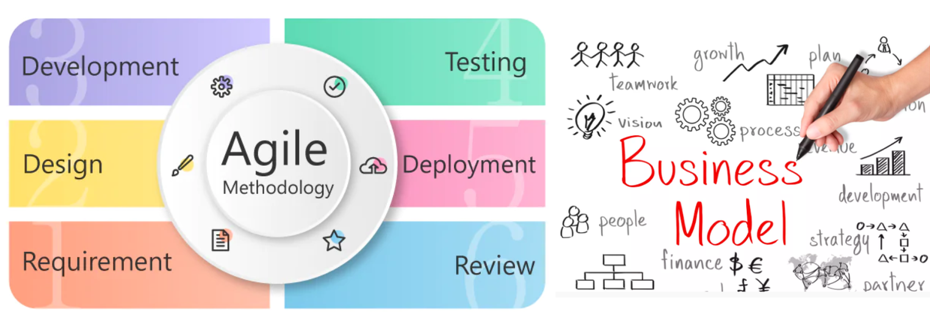
Recognise that Agile methodologies provide a framework for enhancing learning speed and responsiveness to change, while hybrid delivery models offer the structural foundation necessary for consistent project execution. The most effective delivery model integrates both approaches intentionally, using each where it delivers the most value. By deliberately combining Agile flexibility with rigorous structure, organisations can maximise their productivity and adaptability in today’s dynamic environment.
In the rapidly evolving project delivery landscape, Agile and hybrid methodologies have shifted from opposing philosophies to a synergistic approach. By the year 2026, successful organisations are harnessing the strengths of Agile’s short feedback loops and the structured, risk-aware framework of hybrid delivery. This integrated model offers the agility to adapt to change while maintaining the stability needed to govern work effectively, balancing flexibility and accountability.
The essential mindset shift involves recognising “hybrid” not merely as a middle ground between Agile and traditional project management, but as a purposeful, strategic design choice tailored to specific project needs. This approach advocates the judicious use of adaptive methods where continuous learning and customer feedback are paramount, such as in product development, innovation, and user experience design. Conversely, it emphasises the utility of predictive controls in scenarios where certainty is crucial—such as in regulatory compliance, resource allocation, safety standards, and operational readiness.
A hallmark of this hybrid project model is implementing formal decision-making gates at key project milestones, allowing teams to use a more structured approach when needed. However, within each project stage, teams are encouraged to embrace iterative work practices. This enables ongoing refinement and adjustments based on real-time feedback, promoting a culture of continuous improvement while still adhering to essential governance frameworks.
By adopting this nuanced hybrid delivery model, organisations can benefit from Agile’s rapid response capabilities while ensuring critical stability and compliance are not compromised. As a result, companies can navigate complex project landscapes more effectively, delivering value to stakeholders with greater confidence and efficiency.
The Maturation of the Hybrid Model in Organisational Practices
In recent years, many organisations have embraced Agile methodologies, which introduced key practices such as daily stand-ups, iterative sprints, prioritised backlogs, and regular retrospectives. While these practices have helped teams deliver work more frequently and respond swiftly to customer feedback, they have not fully addressed the broader organisational challenges that remain. Large-scale initiatives still require careful consideration and planning, including investment decisions, architectural reviews, security assessments, procurement strategies, regulatory compliance, and coordinating releases across departments.
Traditional project management approaches have typically relied on structured plans, often illustrated with Gantt charts that delineate tasks and timelines. However, these methods often struggle to adapt when customer needs change, technology advances, or market conditions shift. As a result, teams may invest months in executing a predetermined plan only to discover that the final product fails to meet the original problem’s requirements or customer expectations.
To bridge this gap, the mature hybrid model introduces a clear differentiation between two critical questions that organisations must address:
- What aspects must remain controlled?
- What elements should remain adaptable?
Certain factors, such as achieving strategic outcomes, adhering to funding limitations, meeting regulatory obligations, managing substantial dependencies, and fulfilling committed release timelines, may require formal control mechanisms. These components benefit from structured oversight to ensure that the organisation operates within established parameters and safeguards its interests.
Conversely, aspects such as product design, technical implementation, user research, workflow enhancements, and feature prioritisation can thrive in adaptable environments. These areas suit short cycles that allow frequent adjustments based on customer feedback and emerging insights, fostering a more responsive approach to development.
This distinction is crucial to avoid a common pitfall: applying a single delivery method uniformly across all workstreams. For instance, digital product features may utilise Agile sprints to facilitate rapid iterations and improvements. At the same time, a major systems migration might warrant a more traditional stage-gate approach to ensure that critical phases and risks are adequately managed. Similarly, a regulated component might necessitate adherence to formal approval milestones, while the user experience associated with that component evolves through ongoing experimentation and testing.
Recent guidance on hybrid methodologies advocates a pragmatic approach, recommending that organisations adopt delivery lanes tailored to factors such as design maturity, dependency density, regulatory scrutiny, and team readiness. This strategy helps organisations optimise workflows by aligning the delivery method to the unique needs of each project or component, maximising both efficiency and effectiveness in achieving organisational goals.
The Three Operating Principles
1. Deliver in Small Batches
Delivering work in small batches is a strategic approach that helps reduce the distance between effort and evidence. Instead of waiting to finish an entire project before seeking feedback, teams should aim to deliver the smallest useful increment that allows them to test critical assumptions.
Examples of small batches include:
- A single customer journey map, allowing for focused insights rather than attempting to design an entire service experience upfront.
- An automated report that analyses a specific dataset instead of developing a comprehensive analytics platform that encompasses all data sources.
- Targeting one region or user group for a pilot test rather than rolling out a national initiative, enabling feedback that can be quickly implemented.
- Optimising one high-value workflow rather than attempting to streamline every process simultaneously.
- Creating a prototype or running a pilot program instead of finalising an entire engineered product gives stakeholders a tangible point of interaction.
The key advantage of small batches is that they illuminate potential problems earlier in the development process. This approach reduces the cost of missteps, lets teams realise value sooner, and creates more opportunities to learn.
A practical way to assess whether you are working in small batches is to ask: “What is the smallest piece of work that could generate meaningful evidence or insights?” If the outcome still looks like a large project, it may indicate a focus on deliverables rather than experimentation.
2. Seek Frequent Feedback
Frequent feedback is essential to inform the team while they still have the opportunity to adapt their approach. For example, receiving customer feedback twelve months after a project launch may validate that the project did not achieve its objectives, but it fails to facilitate efficient learning or iteration.
Feedback can be gathered through various methods, including:
- Customer interviews that delve into user satisfaction and needs.
- Usability tests that assess how easily users can navigate a product or service.
- Working demonstrations that allow stakeholders to interact with the prototype.
- Operational pilots that test solutions in real-world scenarios.
- Usage data that reflects user engagement and behaviour.
- Service-team observations that provide insight into operational challenges.
- Security and compliance reviews that ensure adherence to necessary regulations.
- Technical spikes and prototypes that explore feasibility before committing to full development.
Finance or commercial validation to gauge market readiness and potential return on investment.
The goal should not be endless opinion-gathering but to test specific assumptions effectively. Each feedback activity should be aimed at answering targeted questions, such as:
- Will customers engage with this service?
- Can employees perform tasks more efficiently using this solution?
- Does the proposed architecture meet performance requirements?
- Can the organisation operate this solution securely?
- Is the expected benefit worth the next step in investment?
Feedback becomes particularly valuable when it translates into actionable changes, informing decisions about priorities, design adjustments, or forecasting.
3. Build Outcome-Based Roadmaps
Traditional roadmaps typically list features, milestones, and delivery dates. While these details can matter, they often fail to clarify why the work matters or how it aligns with broader business objectives.
In contrast, an outcome-based roadmap starts with the specific result the organisation seeks to achieve. It then identifies the key behaviours, capabilities, and experimental approaches that are most likely to yield that result.
For instance, a feature-based roadmap might state:
- Develop a new customer portal, integrate three systems, and launch by September.
- Conversely, an outcome-based roadmap would articulate:
- Achieve a 20 per cent reduction in avoidable customer-support contacts while boosting successful self-service completions to 70 per cent.
This latter framework allows teams the flexibility to adapt their approach based on ongoing research and findings. For example, if customer feedback indicates a preference for guided phone support over an online portal, the team can pivot their strategy without losing sight of the ultimate goal.
An effective outcome-based roadmap typically includes:
- The target outcome to be achieved.
- A baseline metric that provides a starting point for measurement.
- The defined improvements expected to result from the initiative.
- Leading indicators that will signal whether progress is being made toward the outcome.
- Major assumptions that underlie the initiative’s design.
- Guardrails that outline the limits within which the team must operate.
- Identified next steps based on evidence gathered during the process.
Additionally, incorporating hybrid governance becomes more effective when each initiative includes a clear value hypothesis, designated ownership, a range of expected impacts, leading indicators to monitor progress, and a minimum viable test to validate progress. This structured yet flexible approach maximises the potential for success while managing risk effectively.
A Comprehensive Approach to Hybrid Work: Implementing a Practical Rhythm
A hybrid work model becomes more effective when teams tailor rituals and workflows to their projects, rather than adhering to a rigid, one-size-fits-all meeting schedule. This framework is designed to optimise productivity by blending remote exploration, focused in-person collaboration, and sustainable asynchronous communication.
Remote Discovery Sprints
Remote discovery sprints are intense, focused periods during which team members collaboratively investigate and analyse a particular problem or challenge before moving forward with a detailed solution. These sprints are especially advantageous when team members are geographically dispersed or when you need insights and expertise from customers, specialists, or operational staff stationed in various locations.
A typical discovery sprint may encompass several crucial activities, including but not limited to:
- Reviewing Existing Evidence: An in-depth analysis of current data and documentation surrounding the problem at hand, allowing the team to ground their understanding in concrete facts and past experiences.
- Interviewing Stakeholders: Engaging with customers, staff, or other relevant parties through structured interviews to gather qualitative insights and firsthand accounts that highlight needs, challenges, and potential enhancements.
- Mapping the Current Process: Creating visual representations of existing workflows to identify how tasks are currently accomplished, pinpoint areas of inefficiency, and clarify roles and responsibilities within the team.
- Identifying Pain Points and Constraints: Diligently uncovering obstacles that hinder progress or satisfaction, including technological limitations, communication gaps, and process bottlenecks that need to be addressed.
- Testing Early Concepts: Promoting innovation by evaluating preliminary ideas or prototypes in real-world scenarios to gauge their viability and gather immediate feedback.
- Exploring Technical Feasibility: Assessing whether the proposed solutions can be implemented effectively with current technology and resources, and identifying any necessary adjustments.
- Estimating Potential Value: Analysing the possible benefits and outcomes of addressing the identified problem, helping the team prioritise initiatives based on their value proposition.
- Recording Unresolved Assumptions: Keeping track of any uncertainties that remain after the sprint concludes, which can then be addressed in future discussions or phases of the project.
The primary objective of a remote discovery sprint is to emerge with actionable insights and informed decisions, rather than simply accumulating a large backlog of tasks. A successful output might include a validated problem statement that clearly defines the issue at hand, a prioritised list of opportunities to explore further, a tangible prototype ready for more testing, or even a consensus recommendation to stop pursuing a particular idea.
In addition, remote work setups inherently create a written record of discussions and findings that team members across different time zones can revisit. To maximise efficiency, however, avoid turning the sprint into an endless series of video meetings. Instead, keep live sessions focused on engaging discussion and key decisions. In contrast, shared documents, recorded sessions, research repositories, and annotated prototypes can provide easily accessible information for asynchronous review and reflection. This strategy fosters a culture of collaboration and keeps team members aligned and informed, regardless of location.
In-Person Refinement Days: Maximising Collaboration and Productivity
In-person refinement days are designed to foster collaboration by providing an environment conducive to tasks that benefit significantly from physical proximity. These days must not devolve into routine office gatherings, where employees merely convene for meetings that could easily and effectively be held online. Instead, focus on leveraging the unique advantages of face-to-face interaction.
- Purposeful Activities for In-Person Days: Dedicate these days to specific, high-value activities that require active engagement and collaboration. Such activities include, but are not limited to:
- Resolving Complex Dependencies: Address intricate interdependencies between projects or teams that require nuanced understanding and negotiation, ensuring that all stakeholders are aligned.
- Refining Service Blueprints: Collaborate on service blueprints to improve clarity, identify gaps, and streamline processes, helping teams visualise and improve customer journeys.
- Reviewing Architecture and Operational Designs: Lead discussions on architectural frameworks and operational procedures to identify improvements.
- Testing Prototypes with Stakeholders: Facilitate hands-on sessions where stakeholders can interact with prototypes, provide immediate feedback, and better understand user needs and expectations.
- Planning Releases or Migrations: Collaborate to develop detailed plans for upcoming releases or migrations, discuss potential challenges, and align all necessary resources.
- Working Through High-Risk Scenarios: Tackle challenging scenarios that could pose significant risk to projects, brainstorming solutions and contingency plans in a dynamic and interactive setting.
- Aligning Teams with Different Contexts: Create opportunities for teams that don’t often work together to share insights, challenges, and goals, enhancing mutual understanding and collaboration.
- Making Decisions Requiring Rapid Discussion: Use the in-person setting to make critical decisions that benefit from immediate discussion and consensus, avoiding the delays often associated with digital communication.
Defining Clear Outputs
Every in-person refinement day should have a well-defined purpose and measurable outputs. For instance, by the end of the session, the team might aim to:
- Agree on outcomes to be achieved over the next four weeks.
- Resolve at least three cross-team dependencies critical for project progression.
- Approve a comprehensive release-readiness plan that outlines all necessary steps for a successful launch.
Enhancing Quality and Speed of Work
The true value of in-person collaboration lies in its ability to improve both the quality and speed of work. If participants share status updates without meaningful engagement or decision-making, the organisation risks incurring unnecessary costs for travel, interruptions, and longer meetings without substantial benefits. Therefore, approach these days with intention and focus, ensuring all participants actively contribute to advancing shared goals and outcomes.
Asynchronous Decision Logs
Asynchronous decision logs provide a comprehensive record of key decisions the team makes throughout the project lifecycle. These logs capture not only the decisions reached but also the reasoning behind each one, the evidence that supported them, and the timeframes for revisiting them for potential reassessment.
A well-documented entry in this log might look like the following:
Decision: The team has opted to utilise the existing identity platform for the duration of the pilot project.
Date: September 15, 2026.
- Owner: The designated solution architect overseeing the implementation.
- Context: A tight six-week delivery window constrains the pilot project and limits security review capacity, requiring a swift yet secure solution.
- Evidence: The chosen identity platform meets the pilot’s authentication requirements, ensuring compliance and functionality without unnecessary delays.
- Trade-off: Given these constraints, the team decided to defer integrating advanced identity features until the project reaches the scale phase, focusing on immediate needs without overcomplicating the pilot.
- Revisit Trigger: Re-evaluate this decision if the user base surpasses 10,000 or if significant regulatory changes require a different approach.
Maintaining decision logs not only reduces repeated debates over settled matters but also improves transparency in distributed work environments. Furthermore, these logs significantly reduce the likelihood that an absent stakeholder will later contest a decision due to a lack of documented reasoning.
The logs should capture only meaningful decisions that substantially affect key areas such as project scope, overall value, perceived risks, architectural considerations, timelines, customer experience, or operational readiness. Minor conversations or trivial choices should not clutter this log.
Governance Without Bureaucracy
Even in a hybrid delivery model, effective governance remains crucial, but it should prioritise safeguarding value and managing risk rather than merely incentivising teams to produce extensive paperwork.
A streamlined governance model can use stage gates closely tied to established value hypotheses. At each stage gate, decision-makers must critically evaluate whether the available evidence still supports further investment in the project. They should have various actions to choose from, which may include:
- Continue: Proceed with the current plan based on supporting evidence.
- Change Direction: Pivot the project approach to better align with findings and insights gathered.
- Reduce or Increase investment: Adjust resource allocation based on the project’s performance and value demonstrated thus far.
- Pause: Temporarily halt progress to reassess the situation or gather additional information.
- Stop: Terminate the project if the evidence does not support ongoing investment.
- Release the Increment: Deploy the latest iteration of work if it meets required standards and adds value.
- Move to Wider Adoption: Transition the developed solutions into broader use across
Importantly, a well-structured gate should focus not solely on whether the team completed the tasks as planned but also on the pertinent questions, such as, “What have we learned during this phase? What value has been demonstrated through our work, and does it justify the next level of investment?” This mindset encourages continuous learning and adaptation, ultimately leading to more informed and effective decision-making throughout the project journey.
Example Value-Based Gates
Gate One: Identifying a Problem Worth Solving
In this initial phase, the team must clearly demonstrate a significant problem that warrants attention and resources. This could encompass challenges faced by customers, employees, operational inefficiencies, or strategic misalignments. Evidence may include rigorous research findings, comprehensive service data analysis, financial assessments, and compliance with relevant regulatory requirements. At this stage, the core decision is whether to investigate further to understand the root causes and implications.
Gate Two: Proposing a Solution Worth Testing
At this gate, the team must articulate a well-defined value hypothesis that outlines the expected benefits of the proposed solution. They must present a credible experimental framework and pinpoint the specific target user groups affected by the solution. Additionally, the team should identify major implementation risks, leading indicators to measure success, and constraints that may affect the project. The key decision here is whether to allocate funding for a limited-scale experiment or a pilot study to validate the hypothesis.
Gate Three: Evidence Supports Investment Decision
After executing the pilot or early release, the team gathers and analyses evidence reflecting the solution’s performance. This evidence might include metrics showing user adoption rates, reduced processing times, improved customer satisfaction scores, reduced risks, or other relevant indicators of the solution’s effectiveness. The pivotal decision at this gate is whether to continue with the current strategy, pivot to a new approach, scale the solution for broader implementation, or terminate the project if the evidence does not support further investment.
Gate Four: Ensuring Operational Readiness for Adoption
In this phase, the team must provide concrete evidence that the solution can function reliably and securely in a real-world environment. This involves addressing key operational areas such as user support systems, training requirements, data security, compliance with industry standards, ongoing monitoring procedures, ownership responsibilities, and potential impacts of change on current operations. The essential decision at this gate is whether to release the solution for widespread use or proceed with a controlled rollout to mitigate risk while ensuring effective adoption.
Gate Five: Realising the Expected Benefits
The final gate focuses on confirming whether the solution is delivering the anticipated benefits post-implementation. A project may deliver its intended features but fail to achieve the promised outcomes. As such, ownership of the benefits should shift to the designated business area that receives the solution after handover. Value-realisation approaches increasingly emphasise establishing measurable business outcomes at the initial approval stage, assigning specific ownership to individuals or teams within the receiving business unit, and conducting regular benefit reviews at predetermined intervals to ensure accountability and sustained value creation.
Enhancing Gantt Chart Utility and Planning Frameworks
While Gantt charts effectively illustrate the planned sequence and timeline of work activities, they cannot validate whether those plans will deliver real value to the organisation or its stakeholders. A team can execute every task on time, yet that does not guarantee improvements in critical areas such as customer retention, cost reduction, user adoption, or compliance with regulatory standards.
To optimise planning and execution, organisations should leverage a variety of planning tools, each designed for distinct purposes:
- Roadmap: Utilise a roadmap to clearly communicate the overarching goals, intended outcomes, and strategic Direction of your projects. This serves as a high-level visualisation of the journey ahead.
- Backlog: Employ a backlog to manage and prioritise tasks that need to be addressed in the near term. This tool helps ensure you tackle the most pressing items first.
- Dependency Map: Create a dependency map to identify and expose potential coordination risks. Understanding how tasks and projects interact can help mitigate bottlenecks.
- Release Plan: Develop a release plan that coordinates critical commitments and timelines. This helps manage stakeholder expectations and align resources.
- Risk Register: Keep a comprehensive risk register to track identified threats and document responses. This proactive approach helps teams prepare for unforeseen challenges.
- Decision Log: Maintain a decision log that captures the reasoning behind choices made throughout the project lifecycle. Documenting this helps maintain clarity and accountability.
- Benefits Dashboard: Use a benefits dashboard to monitor and assess whether value is being realised post-implementation. This tool can provide real-time insights into project effectiveness.
- Stage Gate Process: Implement a stage gate process to evaluate whether further investment is warranted at various project milestones. This ensures that resources are allocated based on validated outcomes rather than projections alone.
While dates and milestones in project management are undeniably significant—especially in contexts such as contractual obligations, regulatory timelines, funding cycles, customer commitments, or operational deadlines—the focus should be on ensuring that these dates do not overshadow the need for tangible evidence of progress and achievement.
A critical query for effective governance in this context is: “What specific evidence must be presented before we agree to allocate the next set of time, financial resources, or organisational focus?” This question is far more beneficial than simply checking whether every task in a long-range plan is still on track or “green.”
Common Failure Modes in Agile Practices
One recognisable pitfall in Agile implementation is “ceremony without outcomes.” An organisation might enthusiastically adopt a full range of Agile rituals—such as daily stand-ups, sprint reviews, planning sessions, and retrospectives—yet still fail to deliver significant value. In such cases, customer experiences may not improve meaningfully.
This disconnect often happens when meetings become formalities rather than effective decision-making tools. Each Agile ritual should fulfil a specific purpose:
- A stand-up meeting should facilitate team coordination and help address obstacles.
- A sprint review should solicit feedback on the product increment developed during the sprint.
- A retrospective should focus on garnering insights to enhance the team’s workflow.
If any ritual does not support one of these essential functions, you may need to restructure it or eliminate it. To gauge the effectiveness of each ceremony, consider asking the following questions:
- What decision did this meeting support?
- How did it contribute to reducing uncertainty?
- What feedback did we gather to inform our next steps?
- What obstacles were mitigated as a result of this discussion?
- What specific improvements did the team implement in response to the insights gained?
Defining True Hybrid Practices
The term “hybrid” in project delivery does not mean half the team is physically present in a meeting room while the other half struggles to engage remotely. This setup often creates a disjointed experience: those in the room can interact fluidly, while remote participants have limited access to conversation and context.
To achieve genuine hybrid participation, it is crucial to deliberately design the interaction process for all participants and ensure an equal experience. Strategies may include:
- Establishing a shared digital workspace that allows visibility and access for everyone involved.
- Utilising a single conversation channel to eliminate side discussions that create confusion for remote attendees.
- Employing remote-first documentation practices so that all materials are accessible digitally.
- Using high-quality audio and video tools to support clear communication.
- Implementing explicit turn-taking protocols to promote balanced participation across the group.
- Providing written materials for pre-reading to prepare participants in advance of discussions.
- Recording demonstrations and meetings, so all participants can revisit the content later if needed.
- Capturing decisions in real time to ensure clarity and accountability emerge from discussions.
- Guaranteeing equitable access to artefacts, prototypes, and working sessions so that everyone has an opportunity to contribute meaningfully.
Ultimately, the critical factor in hybrid collaboration is not physical presence. Instead, focus on whether every participant can access the same information, influence the same decisions, and engage effectively, regardless of location.
Treating All Work as Equally Agile
In project management, it is crucial to recognise that not all work can move at the same velocity. Certain tasks, such as regulatory submissions, infrastructure cutovers, contractual obligations, essential security controls, and complex migrations, demand a more thoughtful, methodical approach. These activities may require deliberate sequencing, formal approval processes, and a level of scrutiny that contrasts sharply with the fast-paced nature typically associated with Agile methodologies.
Rather than forcing every task into rapid, short sprints, the key is to discern the appropriate delivery lane for each workstream. While Agile practices can effectively govern the design and build phases, it is often essential to employ predictive planning for elements involving external commitments or critical transition points. This ensures that while innovation and responsiveness are nurtured, necessary controls and oversight are also maintained.
Treating All Work as Predictive
Conversely, a common pitfall emerges when teams treat all initiatives as fixed or predictive. Locking every detail in place before teams have enough information creates false certainty. In such scenarios, teams may become overly protective of the original plan, even when evolving evidence suggests a shift in focus or priority is warranted.
Distinguish between aspects of a project that must remain constant—like safety thresholds, regulatory requirements, budgetary limits, or specific launch windows—and elements that should remain flexible. Solution details should remain adaptable until the team has gathered enough evidence to make informed commitments. This balance fosters an environment that welcomes learning and adaptation, both crucial to effective project management.
Measuring Output Instead of Impact
Another critical element to consider is the tendency to measure output rather than the actual impact of work. While tracking the number of completed stories, meetings, documents, or milestones may provide a façade of progress, it often fails to demonstrate tangible results. Output metrics, while still relevant for delivery management, must be linked to outcome measures that genuinely reflect a project’s success.
For example, a team may monitor release frequency. Still, it should also assess metrics such as user adoption rates, task completion rates, error frequency, overall service cost, customer satisfaction levels, revenue generated, or risk reduction achieved. A robust two-tier approach can strengthen this process by using strategic value hypotheses in governance reviews and tactical indicators like feature adoption or task completion in sprint reviews.
A Practical Framework: The Four-Week Outcome Sprint
Implementing this model can be most effective through a structured approach, such as mapping one existing project to a four-week outcome sprint. Instead of restructuring the entire project portfolio from the outset, focus on a current project with a clear challenge, identifiable stakeholders, and enough authority to explore a different delivery rhythm.
Week One: Clarify the Outcome
Dedicate the first week to articulating the desired outcome in precise, measurable terms. Gather baseline data, specify the anticipated changes, define the target user demographic, outline the value hypothesis, identify constraints, and assign ownership of the outcome.
For instance:
- We hypothesise that implementing a guided online renewal journey will reduce incomplete applications by 15% within three months. This improvement is expected because it will provide customers with clearer instructions exactly where they encounter difficulties.
- This week, also pinpoint leading indicators you can monitor within the four-week timeframe. These may include completing a functional prototype task, lowering confusion during usability tests, enhancing processing speed, or increasing customer interest in the proposed service.
Week Two: Test the Riskiest Assumption
In the second week, identify and test the riskiest assumption that could jeopardise the project’s success. Avoid the temptation to spend this time refining a low-risk feature. Instead, focus on whether the intended audience genuinely wants the proposed solution.
Engage in methods such as conducting user interviews, prototype testing, technical spikes, process simulations, or limited operational trials. Ensure these experiments are manageable enough to complete within the week, designed specifically to generate definitive decision-making data.
Week Three: Build or Pilot the Smallest Useful Increment
Week three should involve creating a minimum viable product or the smallest useful increment that stakeholders, users, or operators can interact with. Delivering a functional increment is far more persuasive than merely presenting a concept of the finished solution.
Invite relevant stakeholders across departments—such as operations, support, security, compliance, finance, and other areas that could influence adoption or release—to review the increment within this timeframe.
Week Four: Review Evidence and Choose the Next Move
At the conclusion of the four-week sprint, hold a structured value review session. This concise gathering should summarise and present the following key elements:
- The outcome being pursued.
- The hypothesis that was tested.
- The work completed over the sprint.
- The evidence collected during the testing phases.
- Any remaining risks identified.
- The current forecasted value based on the evidence gathered.
- Recommended next steps, detailing whether to continue, pivot, expand the experiment, prepare for a release, pause, or halt the project.
This structured approach to agile sprints preserves the benefits of the Agile feedback loop while introducing a hybrid model that emphasises evidence-based investment decisions. By giving leaders a clearer view of progress and outcomes, this method goes beyond traditional status reports that may say a project is “on track” without showing tangible improvement.
Initiate with a Singular Project
Begin by selecting one active project within your portfolio and mapping it to a focused four-week outcome sprint. During this sprint, distinctly outline the following elements:
Intended Outcome: Clearly define what the project aims to achieve by the end of the sprint. Include specific, measurable objectives aligned with broader organisational goals.
- Value Hypothesis: Articulate the value that this project is expected to deliver. Consider why this outcome matters and how it impacts stakeholders, including customers, team members, and the organisation as a whole.
- Smallest Useful Increment: Identify the smallest functional part of the project that can be developed and delivered within four weeks and still provide enough value to be beneficial. This increment should allow for feedback while minimising time and resource investment.
- Feedback Method: Establish a clear mechanism for gathering feedback throughout the sprint. This could involve surveys, user testing sessions, or informal check-ins, ensuring that insights are collected continuously to inform project adjustments.
- Decision Owner: Designate an individual or group responsible for making project decisions. This person will be accountable for directing the project, navigating challenges, and ensuring timely resolution of any issues that arise.
- Next Gate: Define the criteria used to evaluate the project’s progress at the next review point, or gate. This includes outlining the necessary conditions that must be met before moving forward.
Redesigning the Project Rhythm Around Evidence
Next, reshape the project’s workflow by centring it on evidence-based decision-making:
- Remote Discovery: Use remote tools to facilitate collaboration, especially when written communication and collaborative platforms provide broader context and preserve a valuable record of discussions.
- Strategic In-Person Meetings: Schedule face-to-face meetings only when the task’s complexity or required collaboration warrants it. Such interactions can be pivotal for resolving dependencies or fostering deeper understanding among team members.
- Asynchronous Decision Recording: Implement a system to record decisions asynchronously. This keeps all team members informed without repeating conversations, allowing a smoother flow of work.
- Use of Gates: Regularly employ gates to evaluate the project based on value, risk, and readiness. These checkpoints should clearly indicate whether the project is on track, allowing necessary adjustments as data is gathered.
- Maintain adaptability: Keep the solution flexible and open to adjustments until sufficient evidence emerges to warrant a firm commitment to a particular direction. This adaptability is crucial in navigating the uncertainties inherent in project development.
- Outcome measurement: Shift the focus from merely celebrating activities to measuring actual outcomes achieved. This approach ensures that the project aligns with desired impact and value delivery.
3/20 Yesterday’s Post. Designing an Innovation Operating System Beyond a Temporary Initiative
