
What’s holding me back is the fear of losing control, the quiet doubt that keeps me circling choices instead of seizing them with full conviction.
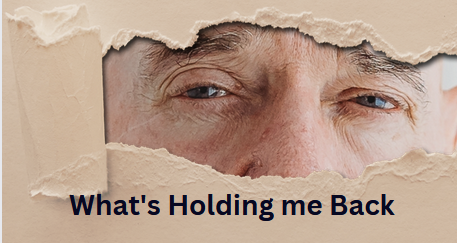
At the core of my hesitation is a palpable tension between my gut instincts and my rational mind. I often feel a strong pull towards what I want to do. Yet, the analytical side of my thinking insists on meticulously examining every potential outcome before I take the plunge. This internal conflict creates a constant state of ambiguity, leaving me suspended between clarity and caution. I find myself mulling over the strengths and weaknesses of each possible choice for what feels like an eternity, until the opportunity to act slips through my fingers. In that void, I’m left grappling with a haunting sense of regret that masquerades as logical reasoning.
Fear also weaves its way into this complex web of indecision, surfacing as an insidious but deeply entrenched force. Beneath my methodical analysis, a quiet, nagging voice whispers, “What if I make the wrong choice?” This yearning for absolute certainty—a futile quest when faced with life’s most significant decisions—feeds my anxiety. I delay the leap into uncharted territory, convincing myself that I require more data or proof, all the while shielding myself from the discomfort of uncertainty and the painful possibility of failure.
Layered on top of this is the narrative I construct about who I am and who I aspire to be. My ideal self is thoughtful and measured, but in seeking to embody these traits, I sometimes blur the line between careful deliberation and unnecessary delay. The desire to maintain a sense of harmony—to be the person who offends no one while pleasing everyone—makes choosing feel like a betrayal of my values. Yet, through my experiences, I’ve come to understand that indecision itself is a form of choice: a silent endorsement of the status quo, a refusal to challenge the present.
Moreover, exhaustion plays a significant role in perpetuating this cycle. The continuous process of analysing options drains my emotional energy, leaving me depleted even when clarity finally emerges. The more I ponder, the heavier each decision feels, as though the very practice of contemplation morphs each potential path into an unbearable weight. By the time I manage to conclude, I often find myself too fatigued to act with the conviction my choice deserves.
Additionally, I grapple with the illusion of control—a belief that through enough contemplation, I can obliterate uncertainty. Yet, I’ve learned that control is not synonymous with clarity; it’s more like a bargaining chip I wield against fear. The reality is that decisive individuals aren’t necessarily those who possess more information; instead, they embrace the idea that their knowledge will always remain limited. My inclination to waver stems partly from my struggle against this truth, from my desperate clinging to the unrealistic fantasy that a flawless decision is within my grasp if I keep analysing long enough.
Ultimately, the barrier to my progress is not a lack of ability but a hesitation rooted in a desire to overthink. I yearn to act responsibly and choose wisely, but awareness without the courage to act can lead to paralysis. The challenge, then, becomes not to forgo reflection but to harmonise it with faith: faith in my capacity to navigate the complexities of different outcomes, to learn from missteps, and to move forward even in the absence of the elusive comfort of total certainty. Only by accepting this beautifully imperfect nature of decision-making can I rise above hesitation and embark on the path of decisive, compassionate action.