
Conflict Resolution is a comprehensive process designed to diminish discord and tension between two or more parties by addressing their underlying needs and interests. This process often involves collaborative strategies such as negotiation, mediation, or facilitated dialogue, which encourage open communication and mutual understanding.
Negotiation is the direct discussion between parties to reach a mutually acceptable agreement. At the same time, mediation involves a neutral third party who facilitates dialogue and guides participants toward a resolution. Facilitated dialogue creates a supportive environment where individuals can express their concerns and viewpoints in a structured manner, often leading to greater empathy and insight.
The primary goal of conflict resolution is to restore peace and cooperation among the parties involved, fostering a stable and constructive relationship rather than simply determining a winner and a loser. By focusing on the underlying interests and needs, conflict resolution seeks to uncover shared goals and collaborative solutions, ultimately promoting long-term harmony and effective communication.
How It Works
Identify the Root Causes and Interests: Delve beyond surface-level requests to uncover each party’s true needs and motivations. This involves asking probing questions, encouraging open dialogue, and actively engaging in discussions that reveal underlying interests. Understanding these root causes is crucial for identifying real issues that need to be addressed.
Practice Empathetic Listening: Engage in listening that prioritises understanding over formulating a response. This means putting aside your own viewpoints and focusing entirely on the speaker’s words, emotions, and concerns. By demonstrating empathy, you can help bring hidden issues to the forefront, creating a safe environment for open expression. Techniques such as summarising what you’ve heard and validating feelings can enhance this process.
Maintain Respect and Civility: In any discussion, especially those involving differing opinions, it is essential to uphold a standard of respect and civility. This includes using language that is constructive rather than inflammatory, recognising the validity of other perspectives, and refraining from personal attacks. By fostering a respectful dialogue, all parties can feel valued and understood, which paves the way for more effective communication.
Explore Collaborative Options: Work together to develop a range of creative solutions that benefit all involved. This may involve brainstorming sessions where all ideas are welcomed, no matter how unconventional. From these discussions, generate multiple options that address the interests of each party. Once potential solutions have been identified, engage in a process of negotiation to explore trade-offs and reach consensus on the best path forward.
Use Neutral Facilitation When Needed: If discussions become contentious or stalled, consider enlisting a neutral facilitator or mediator. This third party can help guide the conversation, ensuring that it remains productive and focused. They can assist in clarifying misunderstandings, managing strong emotions, and honing in on solutions, helping to navigate difficult dynamics objectively.
Agree on a Concrete Plan: Once an agreement is reached, it is vital to document all commitments clearly. This plan should outline each party’s responsibilities, the specific actions that will be taken, and establish timelines for when these actions will be completed. This step is crucial to prevent misunderstandings and ensure accountability, helping to avoid similar conflicts in the future. By having a tangible plan in place, everyone involved can have clarity and direction moving forward.
Benefits in Business
Improves Productivity: By minimising time spent on disputes and misunderstandings, businesses can enhance overall Productivity. When teams work harmoniously toward common goals, they can allocate their efforts efficiently, reducing downtime and fostering a more dynamic work environment. This focus on shared objectives enables streamlined workflows and faster project completion.
Enhances Decision Quality: The process of bringing together diverse perspectives leads to more informed decision-making. Collaborative problem-solving allows teams to explore a range of ideas and solutions, drawing on the varied experiences and expertise of team members. This thorough vetting of options often results in higher-quality decisions that better address the needs of the organisation and its stakeholders.
Strengthens Trust and Engagement: A culture of open communication and collaboration fosters trust among team members. When employees feel heard and valued, their engagement levels rise, leading to increased loyalty and reduced turnover. A positive organisational culture promotes not only retention but also a sense of belonging, which is crucial for long-term success.
Facilitates Faster, More Durable Agreements: Clear communication and collaboration help teams reach agreements more quickly and sustainably. By outlining specific implementation steps and responsibilities from the outset, organisations can ensure that all parties are aligned and committed. This clarity not only accelerates decision-making but also enhances the durability of agreements, as everyone knows what is expected and can work towards fulfilling those commitments effectively.
Benefits in Personal Life
Enhances Relationships: By improving communication skills and fostering emotional awareness, individuals can build stronger and healthier relationships. This leads to deeper connections, as people become more attuned to each other’s feelings and perspectives. Ultimately, this promotes a climate of trust and understanding among friends, family, and partners.
Minimises Emotional Reactivity: With a greater understanding of their own emotions and those of others, individuals can reduce their tendency to react impulsively or defensively. This allows for more constructive discussions during conflicts, leading to resolutions that last longer and are more satisfying to all parties involved. The ability to approach disagreements calmly can transform potentially volatile situations into opportunities for growth.
Transferable Skills: The skills developed through improved emotional intelligence are not confined to one-on-one interactions; they extend to family dynamics, friendships, and community engagements. Whether navigating a tricky family discussion, supporting a friend in need, or collaborating in a community project, these skills can lead to more effective and positive interactions in various social contexts.
Practical outline for a session
Preparation: set goals, define ground rules, and choose an appropriate format (direct conversation, mediation, or facilitated dialogue).
Opening: establish mutual respect, outline the issue, and agree on process and time limits.
Exploration: each party states needs and concerns; summarise to confirm understanding.
Options: brainstorm possible solutions without judgment, then evaluate to find win-win possibilities.
Agreement: select a solution, assign responsibilities, set milestones and follow up.
Review: schedule a follow-up to assess implementation and make adjustments as needed.
Illustration: A simple 5-step flow (Identify interests → Empathic listening → Generate options → Select solution → Implement and review) can be used in both workplace and home settings to move toward constructive outcomes.
Here is a concise outline of Conflict Resolution, including its definition, how it works, and its benefits in business and personal contexts.
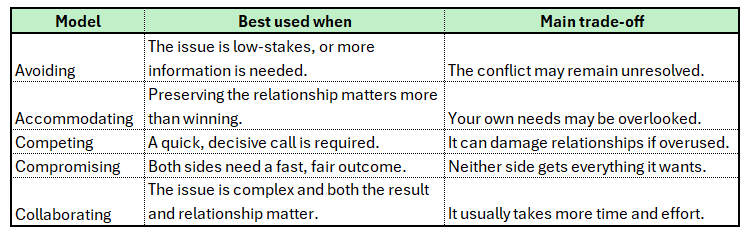
Practical Rule of Thumb for Conflict Resolution
When navigating conflicts or disagreements, it is essential to apply different strategies based on the context and the importance of the issue at hand. Here’s a detailed breakdown of effective approaches:
Avoiding: This strategy is best employed for low-priority issues that do not warrant significant attention. By sidestepping the conflict, you can conserve energy and resources for more pressing matters. This approach is particularly useful when the outcome is inconsequential or when engaging further might unnecessarily escalate tensions.
Accommodating: Utilising this method can help de-escalate situations or preserve harmony within relationships. This is effective when you recognise that maintaining the relationship or group cohesion is more important than winning a specific argument. Accommodating is particularly useful in scenarios where the other party’s needs are more pressing than your own or when you wish to cultivate goodwill.
Competing: This approach is most suitable during emergencies or situations that require quick, decisive action. It is characterised by a strong desire to win or assert one’s position, often at others’ expense. While this might not be a collaborative approach, it is sometimes necessary when immediate results are crucial, such as in crises or time-sensitive decisions.
Compromising: A balanced approach that aims to find a middle ground where both parties can agree on a solution that somewhat satisfies their interests. This method works well when both sides have equal power and when a quick resolution is desirable. It is particularly effective in negotiations where concessions can facilitate agreement without harming relationships.
Collaborating: Collaboration is often the most effective and sustainable strategy, especially when trust and long-term cooperation are vital. This approach involves working together to find a mutually beneficial solution that addresses the concerns and interests of all parties involved. It is particularly essential in complex situations where multiple perspectives and interests need to be integrated for a durable win-win outcome. Building trust and maintaining open lines of communication are critical components of successful collaboration.
In both business and personal contexts, choosing the right approach based on the situation can lead to more effective conflict management and stronger relationships. Remember that collaboration often yields the most favourable results when the stakes are high and when long-term success depends on maintaining positive interactions.
