
Curiosity isn’t optional anymore; it’s your edge—because progress belongs to those who keep asking, seeking, and daring when others stop. Every question you chase becomes the fuel that keeps you ahead.
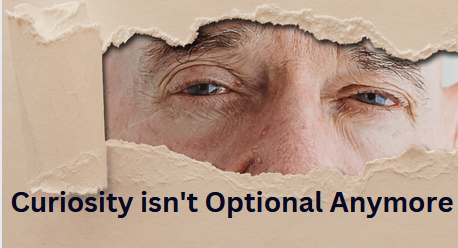
Curiosity has evolved beyond being merely a soft skill; it has become an essential survival skill in our rapidly shifting world. In an era characterised by relentless change, overwhelming information, and groundbreaking technological advancements, the ability to formulate poignant questions has become more important than simply possessing a wealth of answers. With industries, job descriptions, and technologies evolving at breakneck speeds, the traditional expertise that once ensured job security no longer suffices. What distinguishes those who thrive in this dynamic environment from those who struggle is not merely their access to resources or financial backing, but rather their intrinsic capacity for genuine curiosity.
For many years, the foundation of professional achievement relied heavily on mastery—an exhaustive knowledge of one’s field. However, in today’s fast-paced landscape, what you know can quickly become outdated. The lifespan of knowledge is shrinking, creating space for a new paradigm that rewards individuals who embrace a continuous learning and experimentation mindset. People who remain in “beta mode”—constantly evolving, reframing their perspectives, and fearlessly exploring the unknown—stand out. Curiosity is the driving force behind this ongoing adaptation, enabling individuals to reimagine possibilities, identify patterns that might elude others, and challenge long-held assumptions that may no longer hold.
Moreover, curiosity is a catalyst for internal innovation within organisations. Leaders who exemplify inquisitiveness by posing open-ended questions, encouraging dialogue, and fostering a safe space for experimentation cultivate a culture of exploration. Teams that prioritise curiosity over seeking immediate certainty are better equipped to devise creative solutions. They view ambiguity not as a hurdle but rather as fertile ground for new ideas. This cultural shift transforms workplaces from environments that prioritise correctness and predictability to rich landscapes where discovery is celebrated.
At the individual level, fostering curiosity is a powerful antidote to stagnation and burnout. It reawakens engagement by substituting mundane routines with opportunities for exploration and learning. An employee who remains inquisitive about how organisational systems function, why customers behave the way they do, or which innovative tools might enhance their efficiency will consistently contribute greater value than someone who follows established protocols without question. This same curiosity can transform even the most mundane roles into platforms for insight and personal growth.
At the organisational level, the benefits of nurturing curiosity multiply exponentially. Companies that actively invest in building a culture of curiosity—through programs designed for continuous learning, fostering cross-departmental collaboration, and promoting open innovation—possess an innate ability to detect market shifts long before they escalate into crises. These organisations innovate not solely out of necessity but because their very structure encourages it. They possess the agility to pivot in response to changing circumstances, not out of panic but as a natural reflex grounded in their operational habits.
Ultimately, curiosity has transitioned from a desirable personality trait to a critical differentiator, providing a competitive edge. In a marketplace where knowledge is readily available and can be generated by AI within seconds, the valid reward lies in our capability to question—to engage in the ongoing exploration of “what if” and “why not.” It is this relentless quest for understanding and meaning that drives genuine progress in our complex world.
